Humming, Sighing, Warm Hands: 7 Gentle Vagus Nerve Practices for Busy Days
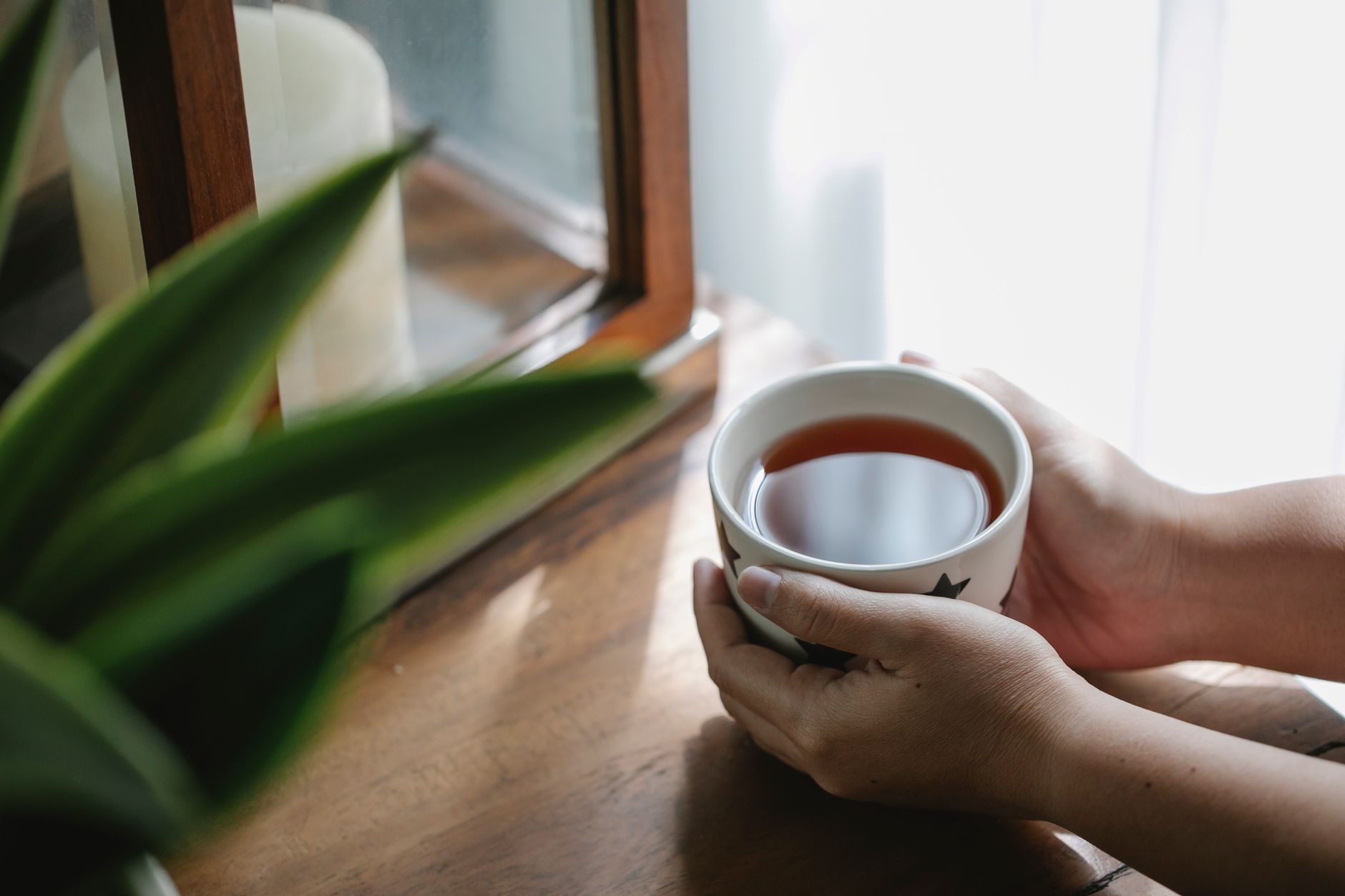
There was a stretch last winter when I realized I was moving through entire days braced — shoulders up, jaw tight, breath living somewhere in my collarbones. As a highly sensitive person, I’d absorbed the idea that settling my body required a yoga mat, twenty spare minutes, and a quiet room I didn’t have. What actually changed things was much smaller: a hum while the kettle boiled, a long sigh at a red light, my hands wrapped around a warm mug before a difficult email.
That’s what this post is — the seven tiny practices that now live inside my ordinary days. No equipment, no schedule change, nothing anyone at the next desk would even notice.
The short answer: the vagus nerve is a long, wandering nerve that connects your brain to your throat, heart, lungs, and belly — Cleveland Clinic has a lovely plain-language overview of it — and it responds to simple physical inputs — vibration, slow exhales, warmth, gentle touch. Practices like humming, extended sighing, and warming your hands take under a minute each and can be woven into moments you already have: the commute, the desk, the kitchen, the wind-down before bed.
The 7 practices at a glance
If you only take one thing from this post, let it be this table. Screenshot it, print it, stick it inside a cupboard door. The whole point is that these rituals ask almost nothing of you — they borrow moments your day already contains rather than demanding new ones. Each practice below gets its own section with the full version, but the 30-second version is genuinely enough on the days when 30 seconds is all you have. Start with whichever one meets you where the tension actually lives: throat, chest, hands, or belly.
| Practice | The 30-second version | When it slots in |
|---|---|---|
| Humming | Hum one low, steady note on a long exhale, feeling the buzz in your chest | Kettle boiling, shower, driving |
| The long sigh | Two quick inhales through the nose, one slow audible sigh out | Red lights, between meetings |
| Warm hands | Wrap both hands around a hot mug and notice the heat spreading | Morning coffee, 3pm slump |
| The extended exhale | Breathe in for 4, out for 6–8, three rounds | At your desk, in a queue |
| Soft gaze | Let your eyes unfocus toward the horizon or a far corner | Screen breaks, the bus window |
| Neck and ear touch | Slow fingertip strokes down the side of the neck, light circles behind the ear | Washing your face, bedtime |
| Cold-water finish | End your hand-washing with 15 seconds of cool water on wrists and face | Bathroom breaks, after cooking |
1. Humming: the kitchen ritual
Humming is the practice I reach for first, because the vagus nerve passes right through the throat — and the gentle vibration of a low hum travels along exactly that pathway. Researchers are exploring how humming and other forms of vocal vibration may relate to the body’s rest-and-settle signaling, and while the science is still unfolding, what I can tell you is how it feels: like something in my chest exhales.
My version is unglamorous. While the kettle boils, I hum one low note — not a song, just a tone — for the length of a slow out-breath. Then again. By the time the water’s ready, I’ve done four or five rounds. The trick is to hum low enough that you feel the buzz in your breastbone, not just your lips. If you feel self-conscious, the shower and the car are perfect humming rooms: private, resonant, already part of your day.
2. The long sigh: the red-light ritual
You already sigh. Your body does it on its own dozens of times a day — a built-in reset you’ve never had to think about. This practice simply does it on purpose, and it’s the one on this list with the most direct research behind it: a Stanford study published in Cell Reports Medicine found that a few minutes of deliberate “cyclic sighing” was associated with improved mood and slower breathing over the course of a month — gentle evidence, not a guarantee, but encouraging for something so small. The pattern is two short inhales through the nose (the second one tops up the lungs), followed by one long, slow, audible sigh out through the mouth. That’s the whole thing.
I anchor mine to red lights and the moment a meeting ends. The car is ideal because nobody hears you, and traffic is exactly the kind of low-grade, on-edge moment where a deliberate sigh earns its keep. One round takes about ten seconds; three rounds fit inside any red light in existence. What I notice afterward is subtle but real — my grip on the wheel softens, my shoulders drop a centimeter, and the driver who cut me off matters slightly less. Small, repeatable, free.
3. Warm hands: the mug ritual
There’s a reason wrapping your hands around a hot drink feels like more than warmth — steady, comfortable heat is one of the oldest signals of safety a body knows. When my hands are cold and clenched, the rest of me tends to follow; when they’re warm and open, something in my chest takes the hint.
The ritual: before you drink your morning coffee or tea, hold the mug with both hands for three slow breaths. Don’t scroll, don’t plan — just notice the heat moving into your palms, then your fingers, then (if you stay with it) up your forearms. That’s it. I do this again at the 3pm slump with herbal tea, and on truly frayed days I’ll run my wrists under warm water for the same effect. It sounds almost too simple to count as a practice. It counts. The overstimulated body doesn’t need impressive; it needs consistent.
4. The extended exhale: the desk ritual
Of all seven practices, this is the one with the simplest logic: your exhale is naturally linked to the slowing, settling side of your nervous system — Harvard Health describes slow, deep breathing as one of the most accessible ways to invite the body’s relaxation response. Make the out-breath longer than the in-breath, and you’re gently tipping the scales toward calm — no app, no cushion, no one aware you’re doing anything at all.
My desk version: breathe in through the nose for a count of four, then out through pursed lips for six to eight, like you’re slowly blowing on hot soup. Three rounds, roughly one minute. I keep a tiny dot sticker on the corner of my monitor as a cue — every time I notice it, one round. On video calls, I do it while someone else is sharing their screen. The pursed lips matter; the slight resistance keeps the exhale slow and even instead of collapsing out in a rush. This one is the workhorse of my wired-but-tired afternoons.
5. Soft gaze: the window ritual
Screen life keeps our eyes locked in hard, narrow focus for hours — and the body reads that sustained visual grip as vigilance. Softening the gaze is the countermove. Let your eyes unfocus and widen toward the edges of the room, or better, look out a window at the farthest point you can find and let your vision go loose, taking in the whole scene without landing on any one thing.
I pair this with transitions: the bus window on my commute, the view from the kitchen sink, the far corner of the ceiling between tasks. Twenty to thirty seconds is plenty. What I notice — and this surprised me at first — is that my breathing changes on its own when my eyes soften, without my trying to change it. The eyes lead, the breath follows. For those of us who are easily overstimulated, this is also a gentle way to lower the sensory volume without leaving the room.
6. Neck and ear touch: the bedtime ritual
The vagus nerve has branches near the ear and runs down the sides of the neck, and slow, light self-touch in those areas is one of the most quietly settling things I’ve found for the end of the day. This became part of my face-washing routine, which is exactly why it survives — it’s stapled to something I already do every night.
The version I use: with flat fingertips, stroke slowly down the side of the neck from just below the ear to the collarbone, five times each side, at about the speed of a slow exhale. Then small, feather-light circles in the groove behind each ear for a few breaths. The pressure should be so light it almost feels like too little — this is a whisper, not a massage. This practice comes straight from the world of somatic work; it’s the kind of small, body-first ritual that programs like The Somatic Reset build a whole daily architecture around, and it pairs beautifully with the long sigh from practice two.
7. The cold-water finish: the sink ritual
Cool water on the face and wrists is an old, well-loved way to shift state — the face is rich with nerve endings that respond to temperature, and a brief, chosen moment of cold can act like a gentle pattern-interrupt for a mind that’s spiraling through its to-do list. The key word is chosen: this is a 15-second finish, not an ice plunge, and it should feel refreshing rather than punishing.
My version lives at the bathroom sink. After washing my hands, I turn the tap to cool and let it run over the inside of my wrists for a slow count of ten, then pat a little on my cheeks and temples. Done. In summer I’ll linger; in winter, wrists only, and that’s fine — the practice bends to the season. I especially reach for this one after cooking, when the kitchen is hot and my senses are full, as a small threshold ritual between “doing” and “done.”
How to string them into an ordinary day
You don’t need all seven. You need two or three that attach themselves to moments your day already hands you. Here’s how I’d start, in order:
- Pick one anchor moment you never skip — the kettle, the commute, washing your face — and attach one practice to it for a full week before adding anything else.
- Choose by location of tension: throat-tight days want humming, racing-mind days want the extended exhale, cold-and-clenched days want warm hands.
- Do the 30-second version without negotiating. The bar is deliberately on the floor; consistency is the entire mechanism.
- Add a second practice only when the first happens automatically, usually after 10–14 days.
- Notice, don’t grade. The question afterward is never “did it work?” — it’s “what do I notice?” A one-centimeter shoulder drop is a real result.
If you want the fuller, guided version of this — a structured sequence of gentle, body-based practices for mornings, transitions, and evenings — that’s exactly what I put into The Somatic Reset — The Vagus Nerve Reset ($37). And if your particular flavor of overstimulation comes from absorbing everyone else’s energy all day, The Architecture of Energetic Protection ($47) is the companion I wrote for exactly that. Both are downloadable, both are built for real, busy days — no mat required.
FAQ
How long before I notice anything from these practices? Often within the practice itself — a softer jaw, a deeper breath, a small drop in the shoulders. Those micro-shifts are the honest unit of progress. The larger change, where your body starts offering calm a little more readily, tends to come from weeks of tiny repetitions rather than any single dramatic session.
Do I need to do all seven every day? No — and please don’t try. Two or three practices anchored to moments you already have will serve you far better than seven you resent. The table at the top exists so you can pick the ones that fit your actual day, not an idealized one.
Can I do these at work without anyone noticing? Yes — that’s how they were chosen. The extended exhale, soft gaze, and warm hands are completely invisible. The long sigh can be done silently through the nose. Save humming for the car, the shower, or the kitchen.
Is there a best time of day? The best time is a time you already reliably occupy: the commute, the kettle, the sink, the wind-down. That said, many people find morning practices set a gentler baseline, while the neck-and-ear ritual naturally belongs to bedtime.
What if a practice makes me feel more restless instead of calmer? Then that practice isn’t yours right now, and that’s useful information — not failure. Bodies differ, and days differ. Shrink it (one sigh instead of three, wrists instead of face) or swap it for another from the list. Gentle means the practice adjusts to you, never the other way around.
Sources: Cleveland Clinic — Vagus Nerve · Balban et al., Cell Reports Medicine (Stanford) — cyclic sighing study · Harvard Health — Relaxation techniques: Breath control helps quell errant stress response
This is a wellness practice, not medical advice. If you’re struggling, please reach out to a qualified professional.